
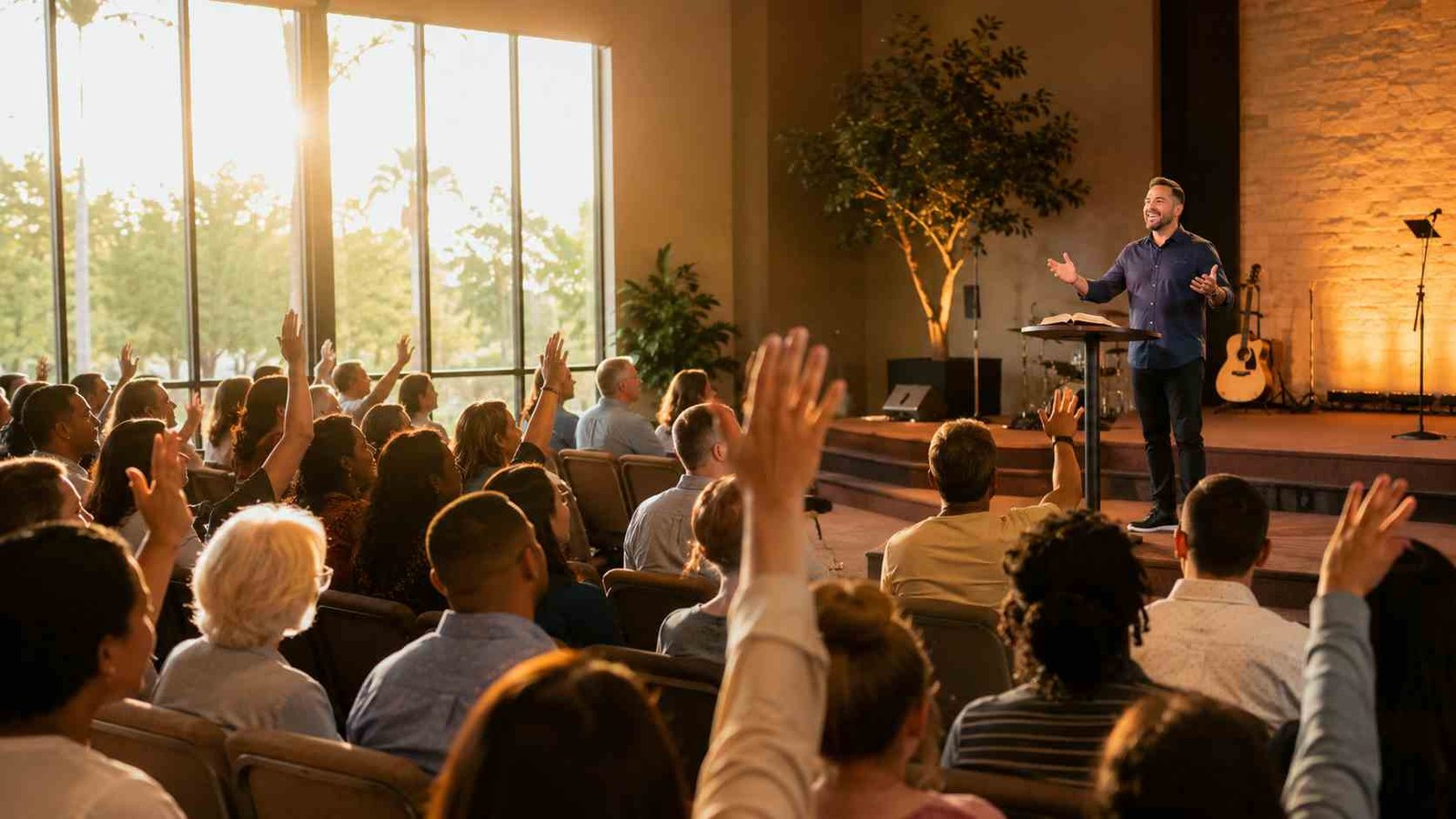
 Churches often become more than buildings. For many people, they become places where broken hearts heal, families reconnect, and faith feels real again. When people search for “Victory Church Lakeland FL,” they are usually trying to understand what kind of church it is, what it believes, and whether it feels like a place where they can belong. Some are new believers. Others may have stepped away from church for years and are slowly trying to return. That’s why questions about denomination, leadership, and worship style matter more than many people realize.
Victory Church in Lakeland, Florida, has drawn attention because of its energetic worship atmosphere, community involvement, and modern approach to ministry. People want to know whether it is connected to a larger denomination, who leads the church, and whether it fits into the category of a megachurch. Those questions are understandable because today many churches look different from the traditional churches people grew up in. Some meet in large auditoriums with live bands and media screens. Others focus heavily on small groups, outreach, and practical teaching. The outward appearance can sometimes leave people wondering what the church truly stands for spiritually.
Here’s the heart of the matter. A church should never be judged only by its building size, music style, or online popularity. Scripture repeatedly reminds believers that faith is rooted in truth, humility, and love. Jesus said in Matthew 7:16, “You will know them by their fruits.” In simple terms, the real character of a church is revealed through the lives it touches, the gospel it teaches, and the way it points people toward Christ rather than toward personalities or trends.
What Denomination Is Victory Church Lakeland?
One of the most common questions people ask is, “What denomination is Victory Church Lakeland?” That question matters because denominations often help people understand a church’s theological foundation, worship traditions, and leadership structure.
Victory Church Lakeland is generally known as a non-denominational Christian church. That means it does not officially belong to a traditional denomination such as Baptist, Methodist, Presbyterian, or Lutheran. Non-denominational churches usually focus on core Christian beliefs centered on Jesus Christ, salvation through faith, the authority of the Bible, prayer, worship, and community outreach.
Now, let’s be real. Sometimes the phrase “non-denominational” can confuse people. Some assume it means the church has no beliefs or no accountability. That is not necessarily true. Most non-denominational churches still hold strong doctrinal beliefs rooted in evangelical Christianity. They simply operate independently rather than under a larger denominational governing structure.
Victory Church Lakeland appears to follow a modern evangelical style of ministry. Services often include contemporary worship music, practical sermons, Bible teaching, prayer ministry, and community engagement. Churches like this usually emphasize having a personal relationship with Jesus rather than focusing heavily on formal traditions or rituals.
In many ways, this reflects the early church described in the Book of Acts. The first Christians gathered together for teaching, worship, fellowship, and prayer. Acts 2:42 says, “They devoted themselves to the apostles’ teaching and to fellowship, to the breaking of bread and to prayer.” The focus was on spiritual growth and community life more than institutional identity.
That does not mean denominations are wrong. Many denominational churches deeply honor God and faithfully teach Scripture. But some believers find themselves drawn to churches like Victory because the atmosphere feels approachable and relational. They may feel less intimidated walking into a modern church environment where the focus is practical teaching and authentic worship.
What Religion Is Victory Church?
Another question people often ask is, “What religion is the Victory Church?” The answer is straightforward. Victory Church is Christian.
That may sound simple, but Christianity itself carries deep meaning. Christianity is centered on the life, death, and resurrection of Jesus Christ. Churches like Victory teach that salvation comes through faith in Jesus, not through human effort alone. Ephesians 2:8-9 explains this clearly: “For it is by grace you have been saved, through faith… not by works, so that no one can boast.”
Victory Church appears to embrace evangelical Christian beliefs, which usually include:
- Belief in the Bible as God’s Word
- Faith in Jesus Christ as Savior and Lord
- The importance of prayer and worship
- Salvation by grace through faith
- Encouragement toward spiritual growth and discipleship
Many modern churches emphasize helping people apply biblical truth to everyday struggles. That includes anxiety, marriage challenges, loneliness, parenting, addiction recovery, and emotional healing. In my experience, that practical connection is often what draws people into faith communities today. People are not only asking theological questions. They are asking, “Can God help me survive what I’m facing right now?”
Jesus often met people in exactly that kind of personal way. He spoke with grieving parents, discouraged fishermen, rejected outsiders, and anxious followers. He taught truth, but He also showed compassion. Churches that reflect both truth and compassion often become spiritually refreshing places for people who feel overwhelmed by life.
Who Is the Head of Victory Church?
When people ask who the head of Victory Church is, they may be asking about the lead pastor or spiritual leadership team. Most churches have a senior pastor or lead pastor who oversees preaching, vision, ministry direction, and pastoral care.
But spiritually speaking, Christians believe Jesus Christ is the true head of the Church. Colossians 1:18 says, “And he is the head of the body, the church.” That verse matters because it reminds believers that church leadership should ultimately point people toward Christ, not toward human personalities alone.
Modern churches can sometimes unintentionally drift into celebrity culture. A charismatic pastor may become widely known online, and people can begin attaching their faith more to a personality than to Scripture. Healthy churches work hard to avoid that trap. Good spiritual leadership encourages humility, accountability, service, and biblical teaching.
Victory Church Lakeland appears to operate with pastoral leadership that focuses on worship, community outreach, and spiritual growth. Churches in this style often include multiple pastors, ministry leaders, worship teams, youth leaders, and volunteer groups working together.
Here’s something important many people overlook. Leadership in a church is not only about preaching from a stage. Often the most meaningful ministry happens quietly. It happens when someone prays with a hurting family after service, visits a hospital room, mentors a struggling teenager, or encourages a lonely person who feels forgotten. Those unseen moments reflect the heart of Christian leadership far more than platform visibility.
Jesus described leadership differently than the world does. In Matthew 20:26, He said, “Whoever wants to become great among you must be your servant.” That changes the entire picture of what spiritual authority should look like.
Is Victory Church a Megachurch?
People also ask whether Victory Church is considered a megachurch. Generally, a megachurch is defined as a church with more than 2,000 regular weekly attendees. These churches often have large campuses, multiple ministries, professional media production, and wide online audiences.
Victory Church Lakeland may be viewed by some as a large modern church, though classifications can change over time depending on attendance and campus growth. What matters more than labels, though, is understanding both the strengths and challenges that come with larger churches.
Large churches often provide many opportunities for ministry and support. They may offer youth programs, counseling ministries, recovery groups, children’s programs, worship teams, outreach missions, and community services. For someone searching for connection or practical help, that can be deeply valuable.
At the same time, people sometimes worry that larger churches feel impersonal. They fear becoming “just another face in the crowd.” That concern is understandable. Human beings naturally long for meaningful relationships, not only large gatherings.
Healthy churches, whether small or large, work intentionally to create real community. That usually happens through smaller groups, volunteer teams, prayer gatherings, Bible studies, and one-on-one discipleship relationships.
The Bible gives a beautiful picture of both large gatherings and close fellowship. In Acts, believers gathered publicly in large numbers, but they also met from house to house. Faith grew both in worship services and around ordinary dinner tables. That balance still matters today.
Why Modern Churches Attract So Many People
Modern churches like Victory Church Lakeland often attract people who previously felt disconnected from church life. Some grew up in strict religious environments where faith felt cold or judgmental. Others simply stopped attending church because life became busy, painful, or confusing.
Then one day they walk into a place where the worship feels alive, the teaching feels understandable, and people greet them without pressure. That experience can be emotionally powerful.
I’ve seen this happen many times. Someone who spent years carrying guilt or spiritual confusion suddenly hears a sermon that speaks directly into their real life struggles. Maybe it is about forgiveness. Maybe it is about anxiety. Maybe it is about rebuilding faith after disappointment. Instead of hearing distant religious language, they hear biblical truth explained in everyday words.
That connection matters because Jesus Himself taught in relatable ways. He spoke about seeds, storms, lost sheep, fishing nets, family conflict, and everyday work. People understood Him because He met them where they were.
Churches that communicate Scripture clearly and compassionately often become places where spiritual healing begins.
What Should You Look for in Any Church?
Whether someone visits Victory Church Lakeland or another church entirely, there are wise questions every believer should ask.
Does the church teach the Bible faithfully?
Does it point people toward Jesus rather than toward hype or personalities?
Does the church show love, humility, and compassion?
Does the leadership demonstrate integrity?
Does the church help people grow spiritually?
Those questions matter more than worship style, clothing preferences, or building size.
A church does not need to be perfect to be spiritually healthy. Every church is filled with imperfect people learning to follow Christ. But healthy churches should consistently point people toward biblical truth and genuine spiritual growth.
Hebrews 10:24-25 reminds believers not to neglect gathering together because faith grows stronger in community. Christianity was never designed to be completely isolated. People need encouragement, prayer, accountability, and spiritual support.
At the same time, wisdom matters. If a church manipulates people emotionally, avoids accountability, distorts Scripture, or elevates leaders above Christ, those are serious concerns. Discernment and prayer should always guide church decisions.
The Role of Worship in Churches Like Victory Church
One thing many visitors notice immediately at churches like Victory Church Lakeland is the worship atmosphere. Contemporary worship music often creates an emotional and reflective environment. Some people deeply connect with that style, while others prefer traditional hymns and liturgy.
Neither style automatically makes a church spiritually stronger or weaker. Worship is ultimately about the heart turning toward God.
Psalm 95:1 says, “Come, let us sing for joy to the Lord.” Throughout Scripture, worship appears in many forms. Some worship moments were loud celebrations. Others were quiet prayers whispered in pain or gratitude.
Modern worship services often use music, lighting, testimonies, and media to help people engage emotionally and spiritually. When done sincerely, those tools can help people focus on God and open their hearts to biblical truth.
But worship should never become only emotional excitement. Real worship continues after the music ends. It continues in forgiveness, kindness, honesty, humility, generosity, and daily obedience to God.
That is where true spiritual transformation happens.
How Churches Help People Through Real-Life Struggles
One reason churches remain important today is because people are carrying enormous emotional burdens. Anxiety, loneliness, broken relationships, addiction, financial stress, grief, and spiritual confusion affect millions of lives quietly every day.
A healthy church becomes more than a Sunday service. It becomes a place where people find support and hope.
Galatians 6:2 says, “Carry each other’s burdens, and in this way you will fulfill the law of Christ.” That verse captures the heart of Christian community beautifully.
Sometimes healing begins with something very simple. A conversation after church. A prayer during a difficult week. A Bible study where someone finally feels safe enough to ask honest questions. A worship song that reminds a hurting person they are not abandoned by God.
Modern churches like Victory Church often focus heavily on practical encouragement because people today are hungry for hope they can actually live out Monday through Saturday, not only hear about on Sunday mornings.
A Thought to Take With You
Victory Church Lakeland FL represents a style of modern evangelical Christianity that focuses on worship, biblical teaching, community, and spiritual growth. It is generally recognized as a non-denominational Christian church with a contemporary ministry approach. Questions about denomination, leadership, and church size are understandable, but the deeper question is always this: does a church help people know Jesus more clearly and live out their faith more faithfully?
That is ultimately what matters most.
Church buildings, music styles, and ministry structures will always vary. But the heart of Christianity remains centered on Christ Himself. Jesus invited weary and burdened people to come to Him for rest. That invitation still stands today.
For anyone exploring churches, visiting Victory Church Lakeland or another local congregation, prayer and discernment matter deeply. Ask God for wisdom. Watch how people treat one another. Listen carefully to how Scripture is taught. Pay attention to whether the environment encourages love, humility, truth, and spiritual growth.
Because at its best, a church becomes more than a gathering place. It becomes a reminder that nobody walks through life alone.
Pastor Samuel Reed has served for over 20 years as a community pastor and counselor. He writes with kindness and wisdom, guiding readers to live out faith, forgiveness, and hope through God’s Word.