
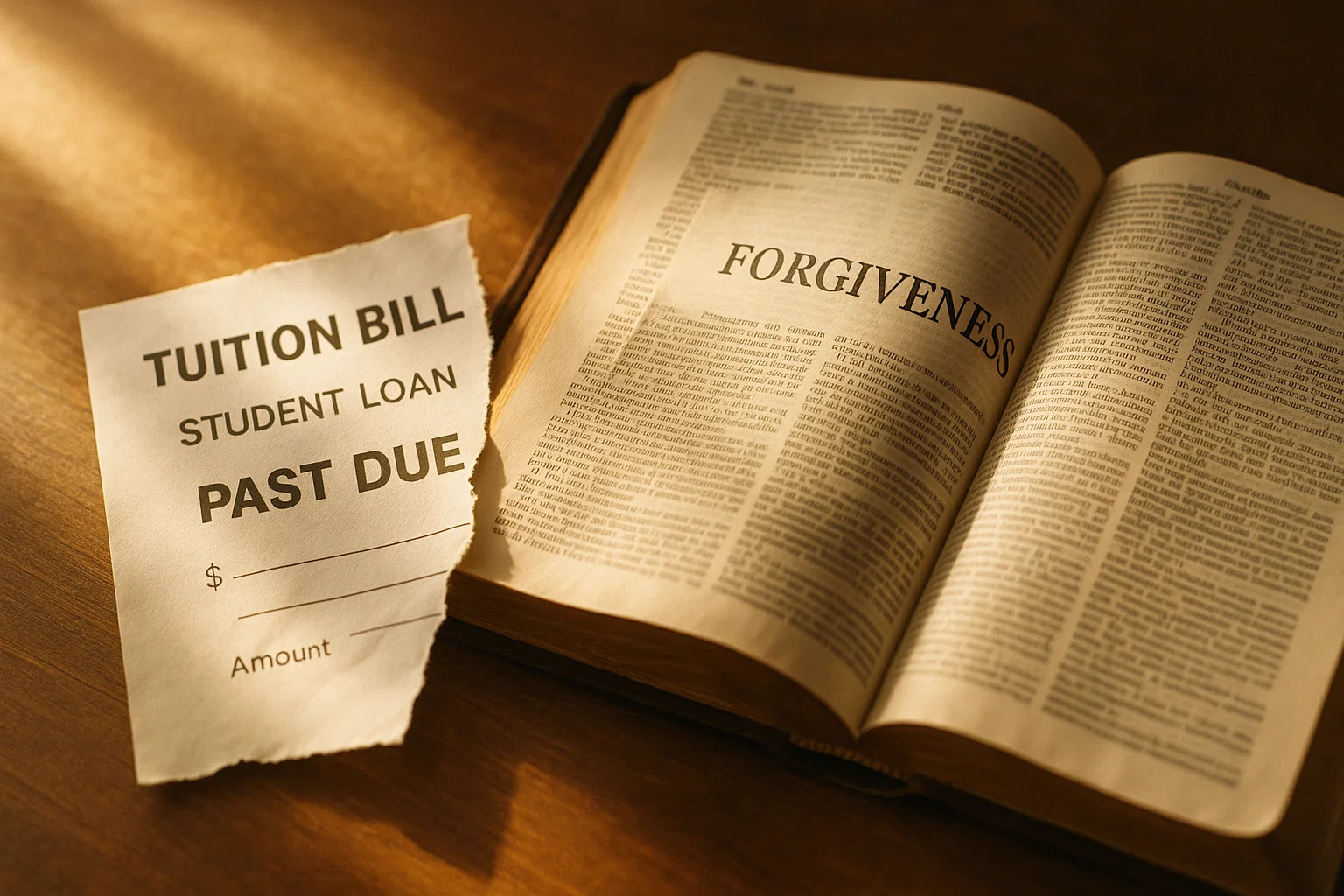
 Understanding Unpaid Tuition Debt Collection Forgiveness
Money has a way of testing faith.
For many students and families, unpaid tuition debt isn’t just a financial number it’s an emotional weight. The letters from collection agencies, the sleepless nights, the fear of what might happen next all can leave a person feeling trapped and ashamed.
But here’s the beautiful truth Scripture reveals: even in financial hardship, God’s grace runs deeper than debt. The Bible’s view of forgiveness, mercy, and stewardship doesn’t separate spiritual life from daily struggles it invites God’s presence into them.
In this article, we’ll explore what the Bible says about debt, forgiveness, and finding peace when unpaid tuition feels overwhelming.
What Does Unpaid Tuition Debt Mean in Today’s World?
Unpaid tuition debt has become a heavy reality for millions of students worldwide. When someone cannot pay their school fees, colleges often turn the debt over to collection agencies. These agencies may call, send notices, or even affect credit scores making a person feel powerless.
From a biblical perspective, though, financial struggle doesn’t mean spiritual failure. The Bible consistently reminds believers that money is a tool, not a master. Proverbs 22:7 warns, “The borrower is servant to the lender.” Yet it also teaches compassion for those in debt: “If your brother becomes poor… you shall not exact interest from him” (Leviticus 25:35–37).
Financial responsibility and grace go hand in hand. Christians are called to act wisely with what they owe but also to trust that God’s mercy is not withheld from those who are struggling. Debt may be real, but so is divine compassion.
Can Student Debt Be Forgiven Spiritually and Practically?
From a legal standpoint, there are government and institutional programs that allow some student debts to be forgiven. These are based on employment, service, or hardship. But for believers, forgiveness is more than a bureaucratic process it’s a spiritual reality.
The Bible shows us the heart of forgiveness through God’s own nature. In the Old Testament, every fiftieth year was declared a Year of Jubilee (Leviticus 25). During this time, debts were canceled, and people were restored to freedom. It was God’s way of teaching Israel that no one should live forever under the weight of what they owe.
In the New Testament, Jesus deepened that meaning. In the Lord’s Prayer, He taught, “Forgive us our debts, as we also have forgiven our debtors” (Matthew 6:12). The word “debts” here isn’t only about sin it includes every form of bondage, including financial.
When we turn our hearts to God, He doesn’t just erase our spiritual record; He changes how we see ourselves. We are no longer defined by what we owe but by the grace that covers it.
The 7-7-7 Rule and the Biblical Call to Mercy
In the world of debt collection, the “7-7-7 rule” is a guideline about how often collectors may contact a person. But interestingly, the number seven in Scripture holds deep symbolic meaning completion, rest, and divine perfection.
Jesus once told Peter, “Not seven times, but seventy-seven times” (Matthew 18:22), when teaching about forgiveness. This wasn’t a mathematical limit it was an invitation to embody endless mercy.
Financial institutions may have policies about how long to pursue debt. But God’s mercy never expires. His forgiveness is not measured in calls or reminders it’s poured out in fullness and permanence through Christ.
When we view our financial struggles through that lens, it changes how we respond. We may still need to face the debt, make payments, or seek assistance but we can do it with peace in our hearts, knowing that our worth is not tied to a balance sheet.
Grace Beyond the Ledger God’s View of Our Debt
There’s a powerful verse in Colossians 2:14 that captures the very heart of God’s forgiveness:
“He canceled the record of debt that stood against us with its legal demands; this He set aside, nailing it to the cross.”
That’s not a metaphor it’s the gospel in action. Jesus took our spiritual debts and canceled them completely. He didn’t negotiate or delay them; He removed them.
This truth can transform how we approach our unpaid tuition or any debt in life. Just as Christ erased our eternal debt, we can face earthly debt without fear or shame. It doesn’t mean irresponsibility it means redemption. You can still plan, pay, and act wisely while holding onto the assurance that God’s grace makes you free inside.
Our financial failures may appear on paper, but in God’s eyes, they’re written over with mercy.
Walking in Faith During Financial Struggle
When money runs short, faith can feel thin. Yet Scripture calls us to live by trust, not by sight (2 Corinthians 5:7).
It’s okay to pray for provision. God listens. He knows your needs. Philippians 4:19 assures, “My God will supply every need of yours according to His riches in glory in Christ Jesus.”
Walking in faith means doing what you can budgeting, seeking help, applying for forgiveness programs and leaving what you can’t to God’s timing. Sometimes He provides through a job, a scholarship, or unexpected kindness from others. Other times, He provides peace and wisdom to endure the season patiently.
Don’t let debt define your destiny. Instead, let it refine your dependence on the Lord. Every payment, every prayer, every act of faith is an opportunity to see His provision unfold.
What This Teaches Us About Faith and Forgiveness
Unpaid tuition debt may seem like a purely financial matter, but it touches something sacred the way we view grace.
Forgiveness, whether it’s the canceling of a loan or the lifting of guilt, is a reflection of God’s heart. He is both just and merciful. He invites us to live responsibly while resting in His compassion.
When Jesus said, “Come to me, all you who are weary and burdened, and I will give you rest” (Matthew 11:28), He meant every kind of burden even financial ones.
If you’re facing unpaid tuition or debt collection, remember this: God’s grace meets you right there. You are not forgotten. His forgiveness doesn’t just cover your past it strengthens your tomorrow.

Dr. Miriam Solano is a pastor and missionary with 18 years of global ministry experience. Her writing inspires spiritual growth and reminds readers that God’s love speaks to every culture and heart.