The Story Behind the Sword
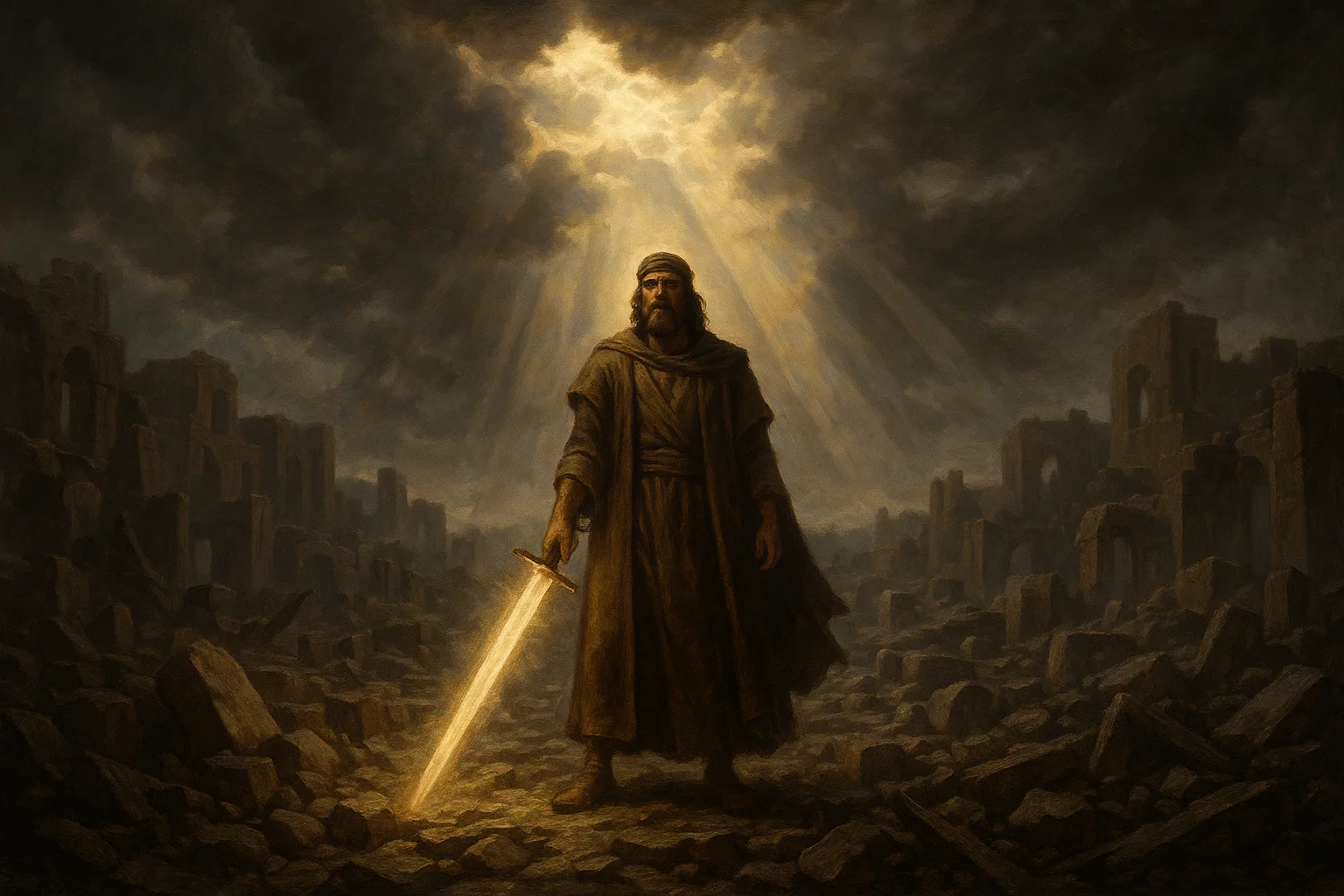
There’s an old image woven through both Scripture and story: a figure standing amid ruins, sword in hand, light glinting off steel. The world around him has fallen cities burned, hearts hardened, faith forgotten. Yet in that wasteland he still stands.
The phrase “The Sword God from a Fallen World” feels like something out of legend, but beneath its mythic surface hides a truth that echoes through the Bible. The sword, in biblical language, rarely points to violence alone. It speaks of discernment, justice, and the Word of God itself.
“For the word of God is living and active, sharper than any two-edged sword” (Hebrews 4:12).
The Sword God is not a deity among deities it’s an image of the One whose Word cuts through illusion and restores what was lost. When we say from a fallen world, we remember Eden’s gates closing behind Adam and Eve, when creation itself tilted toward decay. Every story since then is a search for redemption for someone strong enough to lift the blade of righteousness again.
Think of the ancient heroes of faith: Moses facing Pharaoh, David stepping onto the battlefield, Esther standing before the king. Each, in their moment, became a sword in God’s hand ordinary people made extraordinary when touched by divine purpose.
The Sword and the Fall
The fall did not erase God’s image in humanity; it cracked it. The sword that once guarded Eden now stands at the gate (Genesis 3:24), reminding us that holiness cannot be reached through human strength. Yet even there, hope flickers. For every flaming sword that bars the way, there is a promise that one day the true Word made flesh would open the path again.
Jesus came carrying no weapon. He carried a cross. And yet from His mouth, Revelation says, proceeds a sharp sword (Revelation 19:15) the truth that judges and saves. In Him, the sword becomes redemption’s instrument, cutting sin at its root rather than slaying the sinner.
So the Sword God from a Fallen World is not about a mythical warrior but about Christ, the living Word who steps into our ruin not to destroy but to restore.
A World in Ruins
Look around and the “fallen world” still feels all too real: injustice rising, truth blurred, compassion waning. We build towers of technology and self-reliance, yet loneliness multiplies. Humanity has mastered the blade but forgotten the heart that wields it.
That’s where the symbol turns personal. Every believer faces their own fallen world the shattered friendship, the hidden sin, the daily fatigue of trying to live faithfully amid noise. The question is not whether ruin surrounds us, but whether redemption lives within us.
From Ruin to Redemption
The Word That Cuts and Heals
A surgeon’s scalpel and a warrior’s sword share the same edge; both cut, but for different ends. God’s Word works like that it wounds to heal.
“Do not think that I came to bring peace on earth; I did not come to bring peace but a sword.” (Matthew 10:34)
Those words sound harsh until you remember that the sword Jesus brings divides truth from falsehood, loyalty from convenience. It slices through pretense so that love can finally be honest.
In our fallen world, that sword still moves. It pierces pride, trims away fear, and refines faith. The hand that wields it is not cruel but compassionate, shaping us back into the likeness of Christ.
The Warrior of Grace
If you picture a warrior at all, picture Christ at Calvary. There the greatest battle unfolded not with iron, but with obedience. His victory came through surrender, His strength through humility.
To follow Him is to learn that same paradox: the strongest swords are forged in surrender. The believer becomes a sword of grace, not by conquering others, but by allowing God to conquer the heart.
Paul wrote, “Put on the whole armor of God” (Ephesians 6:11). Among those pieces is “the sword of the Spirit, which is the Word of God.” Notice it’s the only offensive weapon in that armor, yet even this offense serves defense: truth protecting love, faith cutting fear.
When the World Feels Fallen Again
Every generation feels like the last one standing in the ruins. But the story of Scripture insists otherwise: the light always returns. Think of Elijah in the cave, despairing that he was alone; God whispered, “I have reserved seven thousand who have not bowed to Baal.” There is always a remnant, always a reason to rise again.
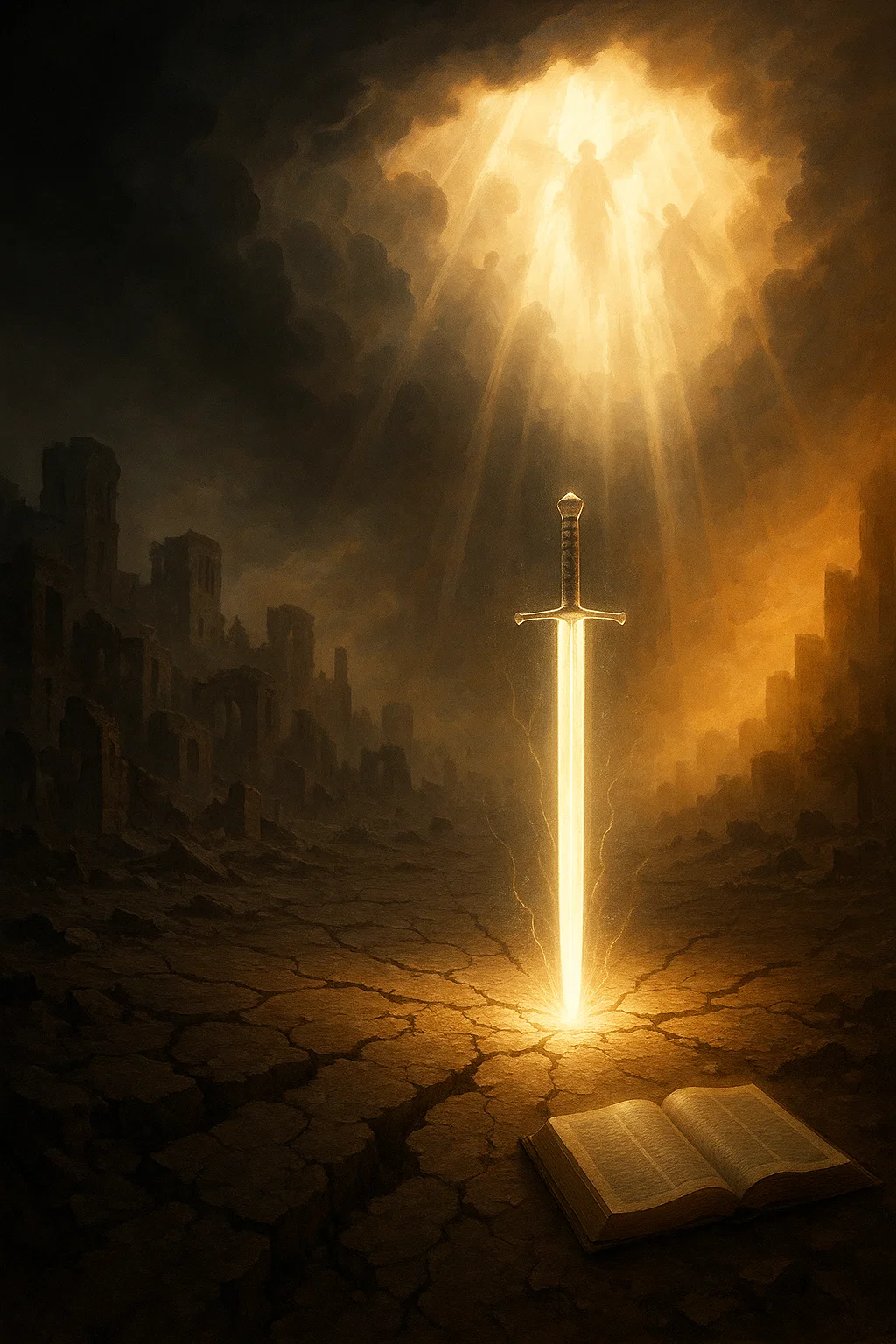
When your own world collapses career gone, family broken, hope dim remember that even in exile, Daniel sharpened his faith; even in prison, Paul sang hymns. The Sword God still works in fallen places. He doesn’t remove the ruins first; He rebuilds from within them.
Questions of the Curious Heart
People sometimes ask, “Is the sword god higher than the sword saint?” borrowing language from novels and anime. The Bible’s answer redirects the question: greatness is not hierarchy but holiness. “Whoever wants to be first must be servant of all” (Mark 9:35).
Others wonder, “Who is the sword god in One Piece?” a pop-culture echo of humanity’s longing for an ultimate master of strength. Yet Scripture teaches that true mastery lies in meekness. Jesus, the carpenter’s son, became Lord of Lords precisely because He laid down His life.
Stories like Chaotic Sword God or Reincarnation of the Strongest Sword God mirror the same desire that Scripture fulfills: to rise from weakness, to redeem what was lost, to find meaning beyond defeat. These tales are shadows of the gospel truth our hearts already know we need a Savior who turns chaos into creation.
Living as a Sword in God’s Hand
To live in Christ is to live sharpened. Every trial tempers us; every prayer polishes dullness into reflection. When forgiveness feels impossible, that’s the grindstone of grace at work.
So how do we become swords in God’s hand without cutting others? By letting the Word dwell richly within us (Colossians 3:16). The more His truth shapes our reactions, the less our edges wound and the more they heal. A kind word can slice despair; a prayer can sever fear; a gentle act can pierce through hate.
Hope at the End of the Battle
At the end of Revelation, the warrior returns not to spill blood but to end it. The fallen world becomes the redeemed city, and every sword is beaten into a plowshare. The blade that once defended holiness now cultivates peace.
Until that day, we hold the sword of faith firmly yet humbly. We fight not against flesh and blood but against despair and deceit. We swing with mercy, not malice, trusting that even small acts of faith can carve paths of light through the darkest valleys.
Closing Reflection
The Sword God from a Fallen World is more than metaphor. It’s the living story of a Savior who stepped into decay to forge hope anew. His Word still burns through rubble, still separates truth from falsehood, still transforms broken hearts into instruments of grace.
You and I, flawed as we are, can bear that same light. We may not wield swords of steel, but we carry words of life. And in a world fallen but not forgotten, that may be the sharpest power of all.
“They overcame him by the blood of the Lamb and by the word of their testimony.” (Revelation 12:11)
Let the world see, through your gentleness and conviction, that the Sword God still reigns and that even in ruins, His Word shines brighter than ever.

Dr. Elias Johnstone is a theologian and church historian with deep insight into biblical doctrine. He helps readers see how God’s truth connects through Scripture, bringing faith to life with meaning and depth.