
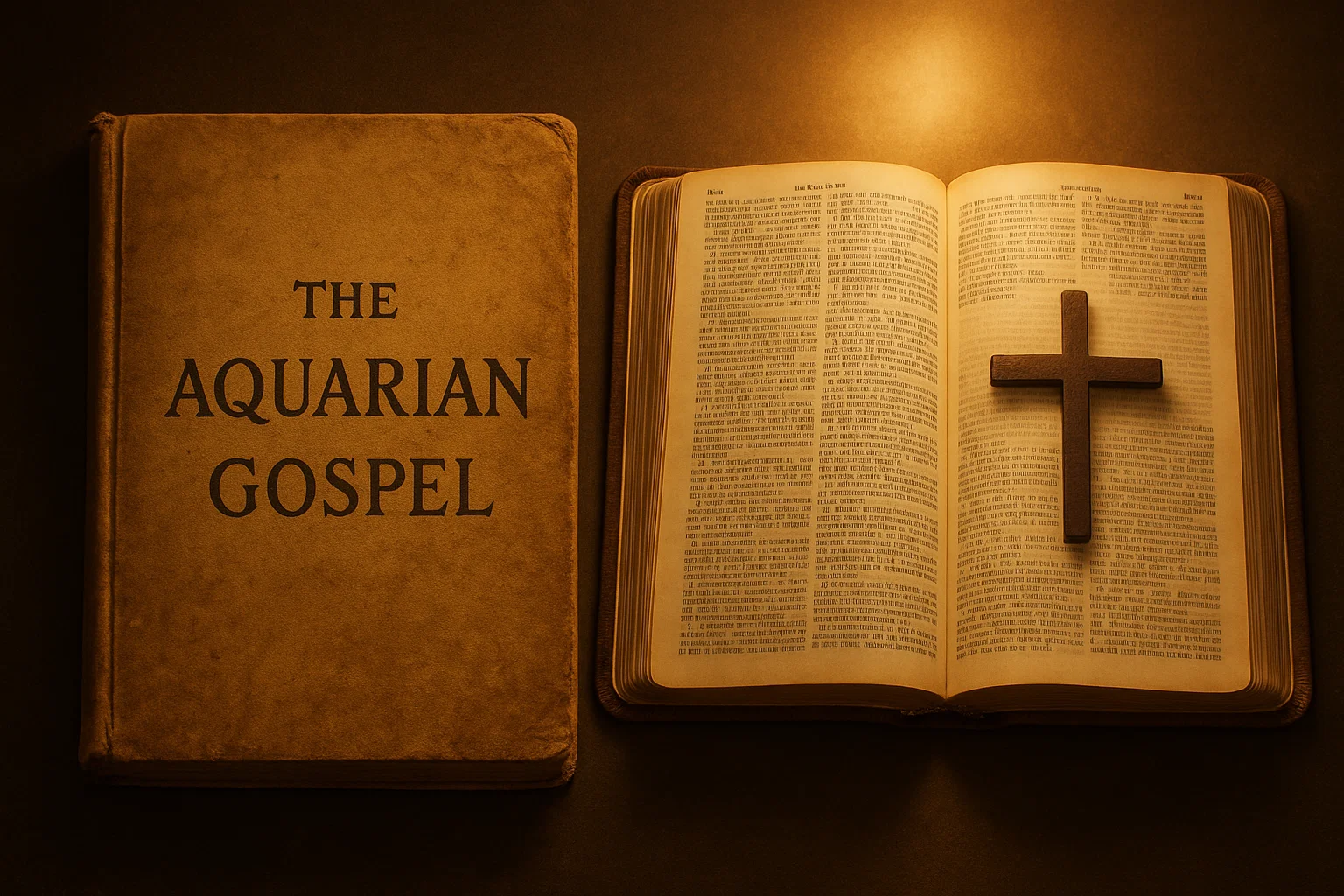
Understanding the Book and Its Appeal
When a person first hears of The Aquarian Gospel of Jesus the Christ, curiosity naturally rises. The title sounds mystical, almost poetic “Aquarian,” as if hinting at stars, new ages, and hidden wisdom. Many seekers, especially those weary of institutional religion, find themselves wondering whether this book might reveal what the Bible has supposedly withheld.
But what exactly is this Aquarian Gospel?
Written in 1908 by an American named Levi H. Dowling, it claims to unveil “lost years” of Jesus’s life those silent decades between His boyhood and the beginning of His public ministry. Dowling said the book was revealed to him through “Akashic records,” a kind of spiritual archive that New Age thought describes as the universe’s memory. According to him, Jesus studied in India, Egypt, and Tibet, mastering mystical laws before returning to Judea to teach.
The narrative sounds adventurous: a global Jesus, traveling among sages and yogis. For many, that image feels inclusive, even comforting. It paints Christ as a universal teacher of enlightenment rather than the incarnate Son of God who died for sin. Yet behind that charm lies a crucial question every believer must ask does it agree with Scripture?
The Lure of Hidden Knowledge
Human hearts are drawn to mystery. From the Garden of Eden onward, the temptation to know more than God revealed has whispered in every generation. The serpent’s old promise “you will be like God, knowing good and evil” (Genesis 3:5) still echoes in modern forms of spirituality.
Dowling’s book promises secret wisdom from the “Aquarian Age,” suggesting humanity is evolving into a higher consciousness where old religions must give way to cosmic truth. That idea flatters the intellect but quietly replaces revelation with self-discovery. In the Bible, however, truth is not hidden in distant vibrations but revealed in the person of Jesus Christ:
“In Him are hidden all the treasures of wisdom and knowledge.” (Colossians 2:3)
The Apostle Paul warned early believers against “philosophy and empty deceit, according to human tradition” (Colossians 2:8). He understood the danger of mixing the Gospel with speculative mysticism. The Aquarian Gospel may use Christian names, but its message flows from a different spring.
What the Aquarian Gospel Says About Jesus
Dowling’s text presents Jesus primarily as a spiritual master, one among other enlightened beings such as Buddha or Krishna. He is portrayed as discovering His divine potential rather than being divine by nature. The book denies the uniqueness of the Incarnation and recasts miracles as demonstrations of cosmic law rather than acts of divine authority.
In other words, Jesus becomes an example of enlightenment, not the Redeemer who saves humanity from sin.
This difference is not minor; it changes the Gospel itself. Scripture declares:
“The Word became flesh and dwelt among us.” (John 1:14)
“He is before all things, and in Him all things hold together.” (Colossians 1:17)
The biblical Jesus is not a seeker of truth but Truth Himself (John 14:6). He does not ascend through meditation into divine awareness; He descends from heaven to bring salvation. To reduce Him to a moral teacher is to strip the cross of its meaning and the resurrection of its power.
Comparing the Two Messages
| Theme | The Aquarian Gospel | The Bible |
|---|---|---|
| Source of Authority | Mystical revelation via “Akashic records.” | God-breathed Scripture (2 Timothy 3:16). |
| Identity of Jesus | Enlightened man who attained Christ-consciousness. | Eternal Son of God, second person of the Trinity. |
| Purpose of Life | Self-realization and harmony with cosmic law. | Relationship with God through repentance and grace. |
| Salvation | Earned through spiritual evolution. | Received by faith in Christ’s finished work. |
| Resurrection | Symbol of soul’s awakening. | Historical, bodily event confirming victory over sin and death. |
The contrast could not be sharper. While Dowling’s work appeals to imagination, the canonical Gospels root faith in verifiable history: names, places, rulers, and eyewitnesses. Luke opens his account saying he investigated “everything carefully from the beginning” (Luke 1:3). That grounding in reality is precisely what the Aquarian Gospel lacks.
Historical Context: America’s Spiritual Crossroads
To understand why Dowling wrote this book, we must step into early 20th-century America. Science was advancing, traditional faith seemed outdated to many, and “New Thought” movements promised mental healing and self-empowerment. The Aquarian Gospel emerged from that climate a bridge between Christianity and metaphysical idealism.
Dowling himself was the son of a minister and had served as a preacher. Yet he grew fascinated by esoteric teachings, merging biblical language with the vocabulary of astrology and reincarnation. The “Piscean Age,” he claimed, represented the old religious order of faith and sacrifice; the coming “Aquarian Age” would emphasize knowledge and unity.
To readers shaped by industrial progress and optimism, that sounded prophetic. But Christianity is not built on zodiacal ages it rests on the unchanging person of Christ. The Book of Hebrews reminds us, “Jesus Christ is the same yesterday and today and forever” (Hebrews 13:8). No cosmic calendar can upgrade or replace Him.
Testing the Spirit Behind It
When evaluating any spiritual text, Scripture instructs us:
“Beloved, do not believe every spirit, but test the spirits to see whether they are from God.” (1 John 4:1)
Testing involves comparing every teaching with the revealed Word of God. Let’s apply that principle.
- The Aquarian Gospel adds to revelation.
The Bible concludes with a warning: “If anyone adds to them, God will add to him the plagues described in this book.” (Revelation 22:18). Dowling’s claim of a new revelation contradicts the biblical closure of God’s Word. - It redefines sin and salvation.
In Dowling’s system, sin is ignorance, and salvation is awakening to inner divinity. The Bible defines sin as rebellion against God and salvation as forgiveness through Christ’s blood (Romans 3:23–24). - It denies substitutionary atonement.
The Aquarian Gospel’s Jesus does not die to bear our sins. But Isaiah 53 foretold, “He was pierced for our transgressions.” Without that truth, the Gospel collapses into moralism. - It embraces reincarnation.
Scripture states plainly, “It is appointed for man to die once, and after that comes judgment.” (Hebrews 9:27). The idea of many lifetimes contradicts both Old and New Testaments. - It replaces worship with self-realization.
In the Bible, redemption leads to adoration “Worthy is the Lamb!” (Revelation 5:12). In the Aquarian view, redemption leads to self-congratulation. The focus moves from God’s glory to human potential.
Why People Still Read It
Even knowing these differences, some Christians admit they’ve found beauty or comfort in the Aquarian Gospel’s words. It speaks of peace, compassion, and unity virtues the Bible also affirms. So why reject it outright?
Because beauty without truth is still deception. A counterfeit coin shines, but it cannot pay the debt. The Aquarian Gospel borrows moral language from Christianity yet directs trust away from Christ Himself.
Modern readers may turn to such texts out of frustration with hypocrisy in churches or the desire for a more “inclusive” Jesus. But rather than chasing new revelations, Scripture invites us to rediscover the living Word through the Spirit. The answer to disillusionment is not dilution it is deeper discipleship.
The Real Jesus: Beyond Every Age
Jesus of Nazareth stands apart from all religious founders because He did not merely teach a path He is the path. His authority rests not on mystical initiation but on resurrection power witnessed by hundreds. The Apostles proclaimed a faith grounded in events they saw, not energies they felt.
The Aquarian Gospel’s subtitle calls Jesus “the Christ of the Piscean Age,” implying that every era gets its own version of Christ. Yet the biblical Christ transcends ages. Before Abraham was, He is (John 8:58). He does not evolve with humanity; humanity must be transformed by Him.
When Paul preached in Athens, a city full of spiritual seekers, he did not mock their curiosity. He simply pointed from the unknown god they worshiped to the known God revealed in Christ (Acts 17). That same gentle boldness is needed today. We need not fear comparing claims the truth welcomes examination.
Lessons for Believers
1. Discernment is an act of love.
Rejecting false gospels is not arrogance; it’s protection. When Jesus warned of wolves in sheep’s clothing, He did so out of care for His flock (Matthew 7:15).
2. Curiosity must bow to revelation.
Exploration is healthy, but once God speaks, we are called to trust His Word above impressions or private visions.
3. Christ alone completes the search.
Every human quest for wisdom, peace, or transcendence finds its answer in the cross and empty tomb. Other writings may inspire, but only Scripture saves.
A Personal Reflection
I once met a university student who had grown weary of what he called “dogmatic Christianity.” He told me the Aquarian Gospel helped him see Jesus as universal love. We sat in the campus café and talked for hours. At one point I asked, “Does the Jesus in that book forgive your sins or just admire your progress?”
He fell silent. “I guess… He doesn’t talk about sin much,” he admitted.
That moment of pause opened space for grace. We read together from John 3, where Nicodemus the scholar of his day also struggled to understand rebirth. Jesus didn’t give him cosmic formulas. He said simply, “You must be born again.”
Truth, I realized, does not need secret codes. It only needs a humble heart willing to believe.
Reclaiming Confidence in Scripture
Many people read the Aquarian Gospel because they’ve lost confidence in the Bible’s reliability. Yet history continues to affirm Scripture’s trustworthiness. Archaeological discoveries from the Dead Sea Scrolls to first-century inscriptions align with biblical detail. Prophecies fulfilled in Christ still stand unmatched by any mystical revelation.
Even on a personal level, the Bible proves itself. It convicts, comforts, and changes lives in ways no channeled text ever has. The Holy Spirit speaks through its pages with living power. When we read Scripture prayerfully, we encounter not ancient ink but the living God.
A Word to Seekers
If you’re exploring spiritual writings and stumbled upon the Aquarian Gospel, know this: your hunger for truth is sacred. God placed it in you. The Bible does not shame sincere seeking; it promises, “You will seek Me and find Me when you search for Me with all your heart.” (Jeremiah 29:13).
Yet truth must lead somewhere real. Jesus invites you not into an age of Aquarius but into the eternal kingdom of God. His call remains gentle but firm:
“Come to Me, all who labor and are heavy laden, and I will give you rest.” (Matthew 11:28)
Rest doesn’t come from hidden records in the sky it comes from nail-scarred hands that opened heaven’s door.
Final Thoughts
The Aquarian Gospel of Jesus the Christ is an intriguing artifact of spiritual history, but it is not Scripture. It echoes humanity’s timeless dream to reach God on our own terms. The true Gospel tells the opposite story: God reaching down to us through His Son.
Faith need not fear investigation. Read widely if you must, but measure every voice against the one that still says, “I am the way, the truth, and the life.” (John 14:6)
There is no newer revelation, no cosmic upgrade, and no secret age that can surpass the cross. The light we seek has already dawned and His name is Jesus Christ.

Dr. Aaron Cole is a Christian apologist and teacher who explores the meeting of faith, reason, and modern life. He helps readers strengthen belief in the Bible’s truth through clear, thoughtful reflection.