
Understanding the Question
When Faith and History Intersect
Every generation of believers eventually asks a curious question: What do other ancient writings say about Jesus? For Christians, the Gospels stand as the inspired record of His life, death, and resurrection. Yet throughout history, other texts have emerged that reflect how neighboring cultures perceived Him. Among those, none provokes more curiosity and sometimes confusion than the Jewish Talmud.
The Talmud is not a rival scripture but a vast library of rabbinical commentary written centuries after Jesus lived. Its pages capture the spiritual reasoning of Jewish teachers seeking to interpret the Law of Moses in a world forever changed by exile, empire, and the growth of Christianity. When modern readers discover that the Talmud contains brief, sometimes puzzling references that some interpret as speaking of Jesus, questions naturally arise: Why are these there? Do they reveal hostility? Or are they misunderstood echoes of ancient debate?
Before we can answer, we must pause lay aside assumptions, breathe, and remember that behind every sacred text stand real people searching for God. Isaiah 1:18 invites us, “Come now, and let us reason together.” That is the spirit in which we approach this study: not to win an argument, but to understand.
What Exactly Is the Talmud?
To appreciate any mention of Jesus in the Talmud, we first need to know what the Talmud is and what it is not.
The Talmud consists of two major components: the Mishnah and the Gemara. The Mishnah, compiled around 200 CE, collects centuries of oral tradition concerning Jewish law. The Gemara, added over the next three centuries, records conversations of rabbis discussing and interpreting that law. Together they form the Babylonian Talmud and the Jerusalem Talmud, massive works that preserve the heartbeat of Jewish spiritual reasoning after the destruction of the Temple in 70 CE.
In those centuries, Judaism faced enormous pressure. The Temple once the center of worship was gone. The people were scattered across empires. The rise of the Christian church added new theological tension. Rabbis gathered to preserve the covenant identity of Israel through words, commentary, and debate. The Talmud became their vessel of memory and law.
Understanding that setting matters deeply. The rabbis were not writing a historical biography of Jesus. Their purpose was to discuss faithfulness to Torah under foreign rule. When a name resembling Yeshu appears, it surfaces inside a legal or moral discussion, not a narrative about Christ’s ministry. To read those lines as deliberate attacks is to miss their genre and intent.
Possible References to Jesus
A handful of Talmudic passages have drawn attention for centuries most notably Sanhedrin 43a, Sanhedrin 107b, and Gittin 57a. Scholars disagree about whether these truly refer to Jesus of Nazareth or to other figures who shared similar names.
The Hebrew-Aramaic name Yeshu was not unique; it could designate several individuals. Linguistic details, time frames, and story elements often differ from the Gospel record. Some passages mention a teacher accused of leading Israel astray, others a figure connected with Rome or with magic. Yet in every case, the tone is legalistic, not historical: the rabbis are analyzing behavior in terms of Jewish law.
Christian historians once read these lines defensively, as insults. Modern scholars Jewish and Christian alike tend to read them as fragments of rabbinic self-definition. The early Church had proclaimed Jesus as Messiah; rabbinic Judaism needed to clarify its own stance on authority and revelation. What resulted were brief, coded remarks, written generations later, reflecting the memory of a movement that had divided families and communities.
Here humility helps. The Talmud was never meant as a biography of Jesus any more than the New Testament was written to critique the Talmud. Each belongs to its own world, answering its own questions.
The Separation of Two Faith Families
After 70 CE, Judaism and Christianity developed along parallel paths. Both cherished the Hebrew Scriptures, but they interpreted them differently. The Church proclaimed that the promises of the prophets had found fulfillment in Christ; the rabbis, witnessing political collapse, sought renewal through Torah obedience and community resilience.
The Talmud’s composers likely knew about Christianity but rarely engaged it directly. To them, Jesus was part of a painful memory a teacher some Jews followed who, in their eyes, led others away from the Law. Their brief comments preserve that tension. To Christians, these lines sound tragic; to rabbis, they served as cautionary tales. Both groups were wrestling with loss and identity.
Remember: these were not enemies sitting at modern debate tables. They were survivors of war and exile trying to make sense of God’s faithfulness. When we read their words through centuries of misunderstanding, we risk hearing hostility where there was sorrow, and accusation where there was confusion.
What Do Gittin 57a and Sanhedrin 43a Actually Say?
Because these passages are often cited, it is fair to summarize them carefully without sensationalism.
- Sanhedrin 43a records a discussion about someone named Yeshu who was executed on the eve of Passover for leading Israel astray. The text notes that “forty days” were given for repentance, a legal safeguard. Many Christians see this as a faint echo of the crucifixion story; others argue that the timeline and context differ too much for certainty.
- Gittin 57a mentions figures enduring punishment in the afterlife, including one called Yeshu, within a moral allegory. The passage’s purpose is to illustrate consequences for arrogance, not to deliver doctrine about hell. Over time, polemic readers on both sides exaggerated its meaning.
Modern rabbinic authorities often clarify that these lines should not be read as definitive statements about Jesus of Nazareth. They reflect midrashic storytelling a mix of symbolism, folklore, and moral reasoning. Within Jewish tradition itself, the passages hold little authority; their purpose is ethical illustration, not theology about Christians.
For Christians, however, such verses can stir emotion. The key is to remember that our response must mirror the heart of Christ: truth expressed through grace.
Reading Through the Lens of Grace
How Should Christians Respond?
The apostle Paul wrote, “If it is possible, as far as it depends on you, live at peace with everyone.” (Romans 12:18). That instruction applies even to texts that challenge us. We are not called to erase differences, but to model Christlike humility when differences appear.
When reading the Talmud, believers can respond in three ways:
- With curiosity, recognizing that understanding another faith’s writings deepens our awareness of history.
- With respect, acknowledging that Jewish scholars safeguarded Scripture from which Christianity itself sprang.
- With discernment, keeping central what defines Christian faith: the revelation of Jesus as the Son of God and Savior.
Our goal is not to defend Christ against the Talmud He needs no defense but to let such study enlarge our gratitude for redemption. Even where another text misunderstands Him, His truth remains unchanged.
Jesus’ Teaching About Misunderstanding
During His ministry, Jesus often faced misrepresentation. Religious leaders questioned His authority, and political rulers doubted His mission. Yet He met opposition not with bitterness, but with love. On the cross He prayed, “Father, forgive them, for they know not what they do.” (Luke 23:34).
That prayer becomes our model. When Christians encounter writings that differ from their belief, the response is not fear or anger it is forgiveness and compassion. The same mercy that reached us through the cross extends toward every heart that has yet to see Him clearly.
Studying the Talmud through this lens transforms curiosity into prayer: “Lord, help me see what You see people seeking truth.”
Why These Ancient Dialogues Still Matter
In an age of division, learning how Judaism and Christianity parted ways helps modern believers heal old wounds. Understanding the Talmud’s voice reminds us that faith communities can disagree profoundly and still bear witness to humanity’s longing for God.
When Christians read Jewish texts respectfully, several good things happen:
- Historical appreciation grows. We remember that Jesus was Jewish, steeped in the very traditions the rabbis sought to preserve.
- Biblical roots deepen. Many New Testament ideas parables, debates about law, the language of “kingdom” echo rabbinic methods of teaching.
- Mutual respect increases. Dialogue replaces caricature; compassion replaces suspicion.
The apostle Peter urged believers to show gentleness and reverence when giving reason for their hope (1 Peter 3:15). That principle guides every interfaith encounter. The purpose is not to dilute conviction but to display the character of Christ within conversation.
Faith, History, and Hope
Some readers ask, “If the Talmud’s comments seem negative, does that threaten our faith?”
Not at all. The Gospel does not depend on the approval of other texts. Our assurance stands on the resurrection, attested by eyewitnesses and sealed by the Spirit. What the Talmud shows indirectly is that Jesus’ influence reached even those who opposed Him. His name echoed through centuries because His life altered history’s course.
Consider this irony of grace: even when others tried to erase His memory, their words ensured He would be remembered. The very debates that questioned Him also confirmed that He had lived, taught, and left an imprint too strong to ignore.
Through the centuries, God has used misunderstanding to magnify truth. Where confusion spreads, revelation grows clearer. Where hostility rises, love proves stronger. And where human words fail, Scripture still speaks with eternal authority:
“In Him was life, and that life was the light of all mankind.” (John 1:4)
Building Bridges, Not Walls
Modern believers have a sacred opportunity. Instead of viewing Jewish writings as opposition, we can see them as testimony to humanity’s shared search for the Holy One. When Jesus met the Samaritan woman, He broke through centuries of religious prejudice. His conversation revealed that true worshipers would worship the Father “in spirit and in truth.” (John 4:23)
That same spirit invites Christians today to engage Jewish friends and texts with empathy. The path of dialogue does not weaken belief it strengthens love. Every respectful conversation becomes an act of witness, showing that the Gospel produces peace, not pride.
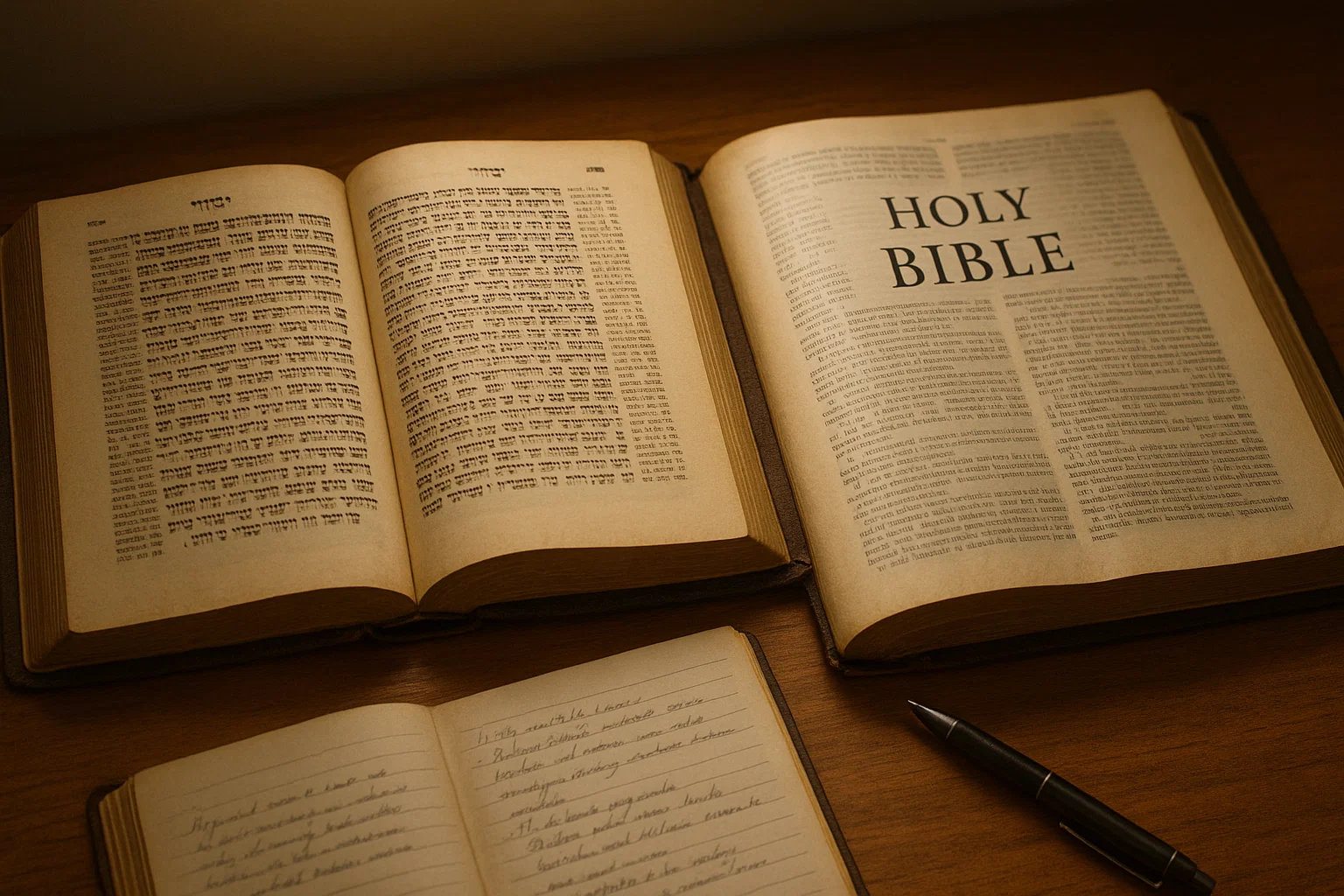
Imagine a study table where the Bible and the Talmud rest side by side. One speaks of covenant law, the other of fulfilled promise. Together they remind us that revelation is not a competition but a story one that began with Abraham’s faith and finds completion in Christ.
Personal Reflection: What We Learn from the Talmud
When I, as a theologian, first read the Talmud’s scattered mentions of Yeshu, I felt discomfort. Yet as I continued, that discomfort turned into humility. Here were voices wrestling with questions of faith centuries ago, longing though they did not know it for the same Messiah I love. I realized that God’s grace is patient enough to meet every culture in its own language.
Perhaps that is what Paul meant when he said, “Oh, the depth of the riches of the wisdom and knowledge of God!” (Romans 11:33). The story of redemption is bigger than any one nation or text. Even misunderstanding cannot silence it.
Closing Reflection
In the end, the question “What does the Talmud say about Jesus?” leads us back to a more important one: Who do you say that He is? (Matthew 16:15). The Talmud offers glimpses from a distance; the Gospels offer relationship face to face. One debates; the other redeems.
Understanding what the Talmud says helps us appreciate how faith journeys diverged after the first century. But understanding what the Bible says reminds us why Jesus remains central to salvation history. His story cannot be confined to commentary or controversy. It is written on hearts transformed by grace.
So we close not with argument but with worship:
“That at the name of Jesus every knee should bow,
in heaven and on earth and under the earth,
and every tongue acknowledge that Jesus Christ is Lord,
to the glory of God the Father.” (Philippians 2:10-11)
May that confession fill every conversation with scholars, with neighbors, and even with the pages of history itself until all the world knows the truth in love.

Dr. Elias Johnstone is a theologian and church historian with deep insight into biblical doctrine. He helps readers see how God’s truth connects through Scripture, bringing faith to life with meaning and depth.